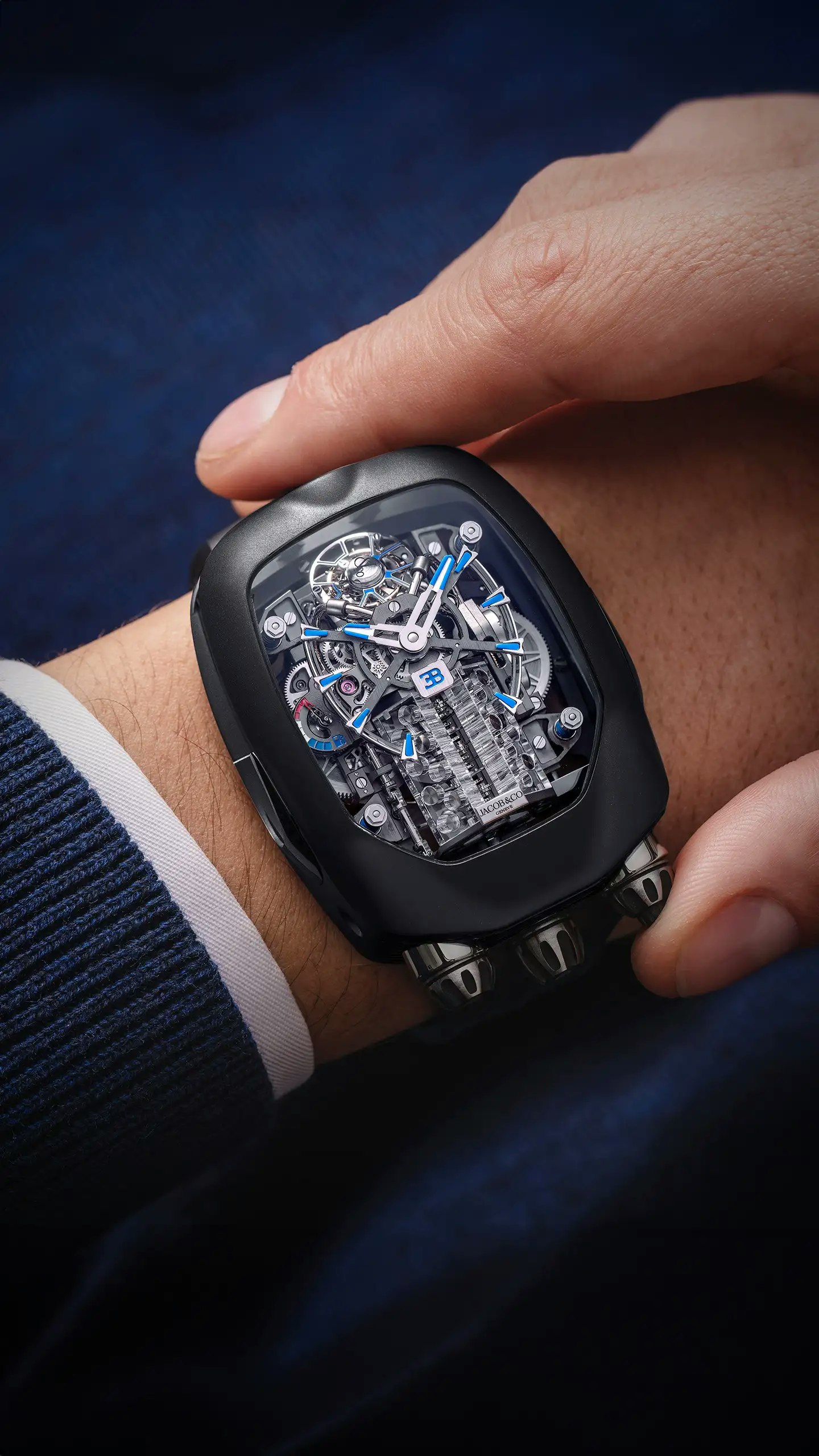
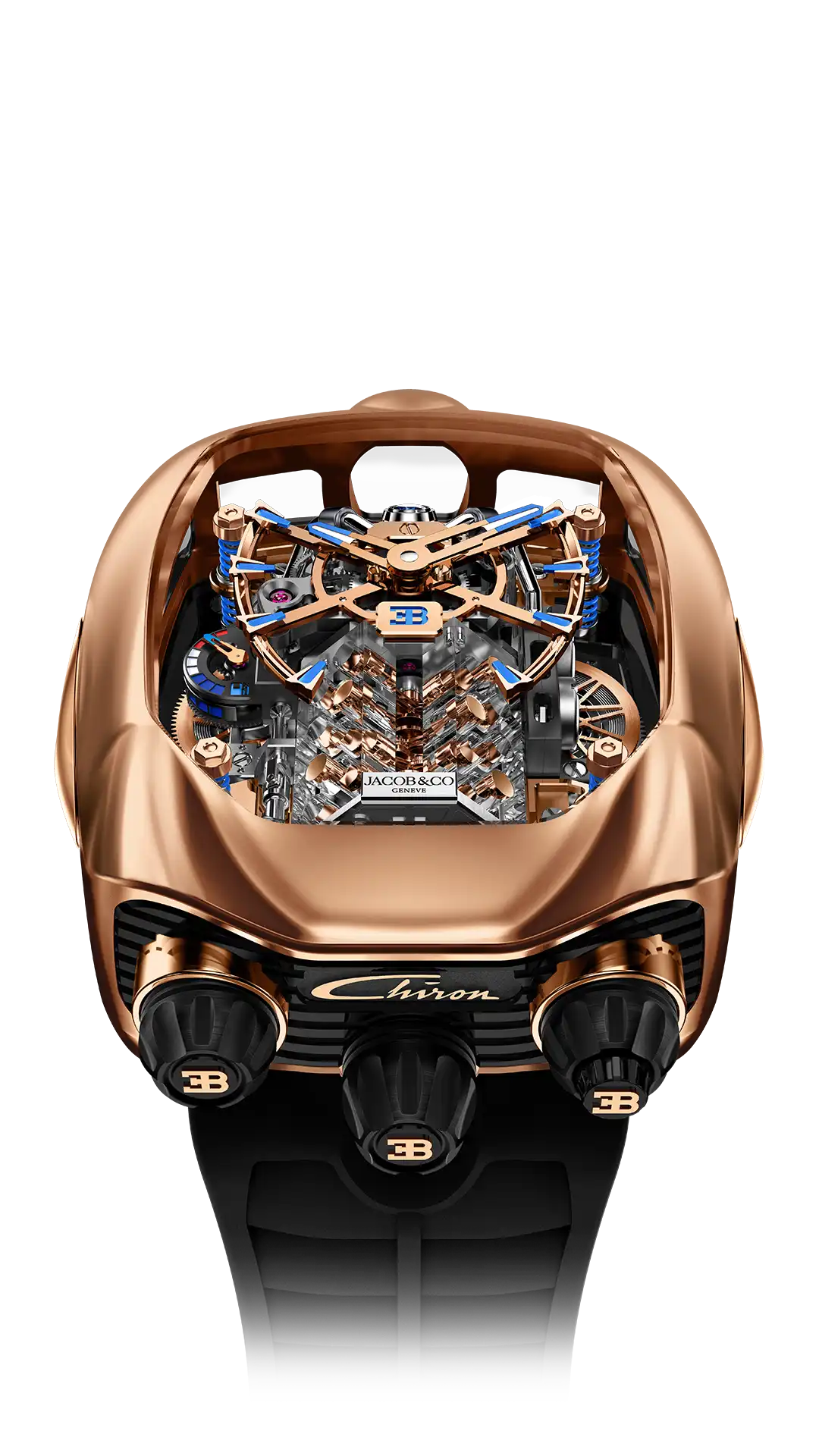
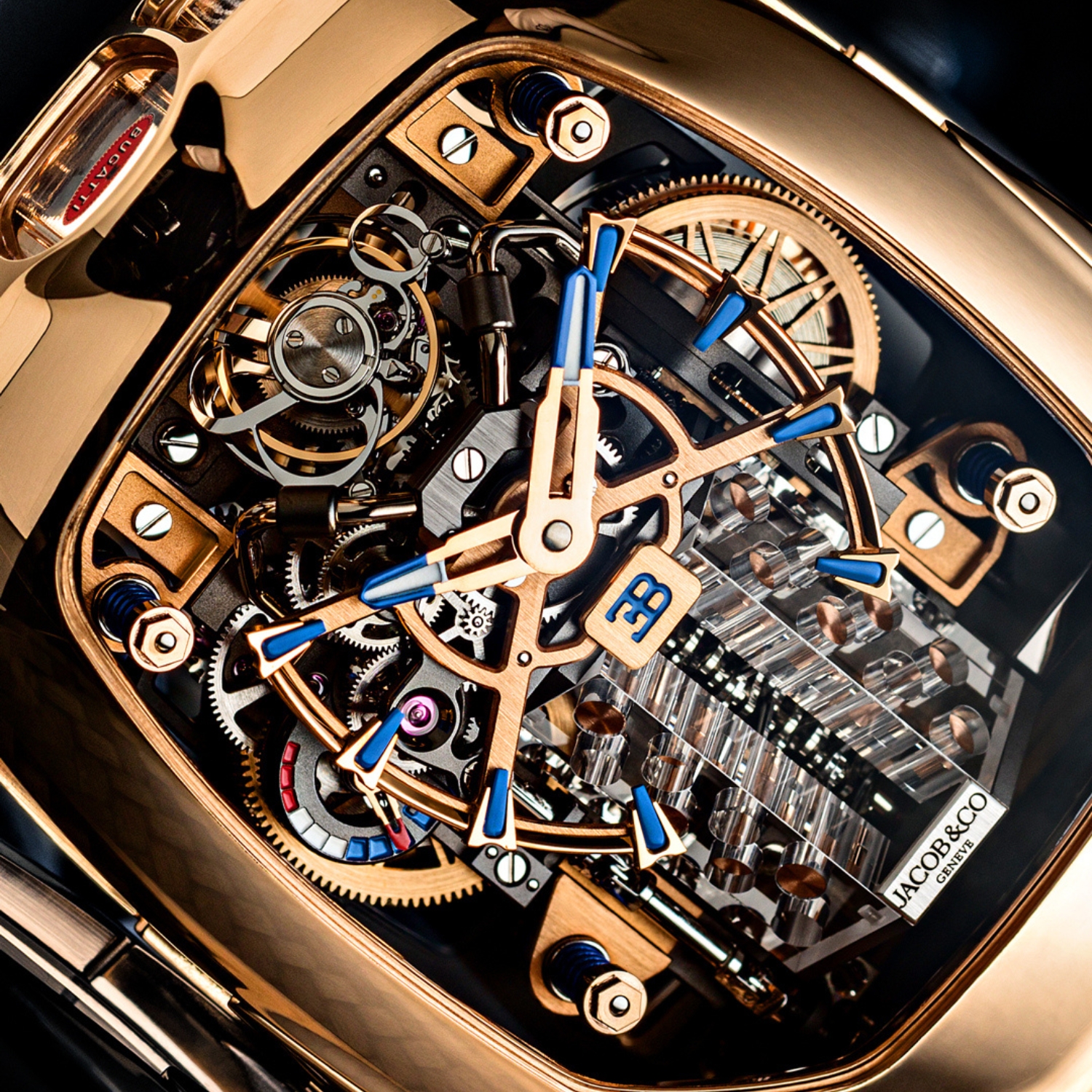
When Mate Rimac speaks, the hypercar world leans in. Not just because he commands the helm at Bugatti-Rimac, but because his words carry the weight of a man who already reinvented the electric supercar with the Nevera. So when the CEO recently declared that supercars are entering their "Swiss Watch Phase," the statement landed with the precision of a perfectly executed gear change. It's a metaphor that reframes the entire trajectory of ultimate automotive expression—shifting the conversation away from raw, digitized performance and toward something far more enduring: mechanical artistry. For buyers, collectors, and enthusiasts, this isn't a retreat from the future. It's a deliberate, calculated pivot toward a value system that prizes analogue soul over silicon brain.
The analogy runs deeper than surface-level marketing. A Patek Philippe or an Audemars Piguet commands seven-figure sums not because it tells time better than a quartz module—it often tells it worse—but because of the intricate, hand-finished micro-engineering breathing beneath the sapphire case. Rimac is suggesting the hypercar is undergoing the same metamorphosis. The era of simply chasing top-speed records is waning, as evidenced by the Bugatti Brouillard, a one-off $20 million creation recently spotted testing at an airfield, executing a full-bore launch with almost no tire smoke. That's not a bug; that's the feature. The goal is no longer to overwhelm the driver with violent, unhinged force. Instead, the objective is to deliver velocity with such seamless, mechanical sophistication that it feels inevitable, almost serene—like the sweep of a second hand on a perpetual calendar. The lack of drama *is* the drama.
The Mechanism Over the Appliance
This philosophical shift explains why Rimac is doubling down on internal combustion, insisting that gas supercars will dominate for decades. It would be easy to dismiss this as the stubbornness of a traditionalist, but Rimac is the man who electrified the world with the C_Two concept. His conviction now is born of observation, not nostalgia. He sees that the wealthiest clientele—the people commissioning the Bugatti Destrier, a one-meter-tall, sculptural one-off that debuted at Pebble Beach—are not seeking the most efficient means of conveyance. They are seeking the most compelling expression of human endeavor.
A combustion engine, with its hundreds of moving parts, its violent internal explosions tamed into harmonic rhythm, and its visceral soundtrack, is a living mechanism. An electric motor, for all its brutal instantaneous torque, is a calculated appliance. In the Swiss Watch Phase, the appliance is not a luxury item; the mechanism is. Rimac's insight is that the hypercar's future isn't about what's fastest in a straight line—it's about what's most captivating under the skin. The engineering itself becomes the spectacle, the visible proof of human mastery over physics.
Ownership as Provenance
For the buyer, this changes the calculus of ownership entirely. The depreciation curve of a standard supercar is a well-known hazard, but a Bugatti is already treated as an asset class. The "Swiss Watch Phase" accelerates that trend. When you purchase a machine like the Chiron Super Sport, you are not buying a car; you are buying a horological instrument of motion. The value lies in the intangible—the assembly tolerances measured in microns, the hand-polished intake ports, the bespoke interior stitching that takes weeks to complete.
This is why the recent saga of the $6 million Chiron Pur Sport, rebuilt by YouTuber Mat Armstrong, drew such a pointed personal response from Rimac. The CEO didn't just see a repaired car; he saw a desecrated artifact. Confronting the owner in person was not about a warranty claim; it was about the sanctity of the object. When machines become mechanical masterpieces, unauthorized hands are not just a risk to performance; they are a threat to provenance. In this new paradigm, the car's history is as important as its horsepower, and its integrity is non-negotiable.
The End of the Horsepower Wars
The "Swiss Watch Phase" also signals a definitive end to the horsepower wars as we know them. The Brouillard and the Destrier are not about being the fastest; they are about being the rarest, the most bespoke, and the most beautifully engineered. The future of the brand lies in the atelier, not the wind tunnel. Rimac's vision suggests that the next decade will see Bugatti producing fewer cars, but with even greater focus on complexity and craft. The CEO's comments about the rich choosing mechanics over tech are a direct appeal to a specific psychographic: the collector who values the tick of a mechanical movement over the silent glow of a screen.
The automotive world is moving toward a future where the internal combustion engine becomes a forbidden fruit, and like any prohibition, it only increases the desirability of the contraband. The hypercar is no longer a mere vehicle; it is a legacy object, a keepsake for the next century, and a testament to the idea that the most advanced technology is often the one that whispers, rather than shouts, its brilliance.
Rimac's "Swiss Watch Phase" isn't a surrender to nostalgia—it's a declaration of a new standard. Bugatti has always understood that true luxury isn't about doing more; it's about doing things with more meaning. As the electric tide rises everywhere else, Molsheim is doubling down on what makes the brand eternal: the belief that a machine can be more than transport. It can be a masterpiece. And like the finest timepieces, its value isn't measured in seconds—it's measured in generations.